ASA SECTION ON SOCIAL PSYCHOLOGY
  • Home
    • About Us
    • Join Us
    • Donate
  • Officers and Council
    • Current Leadership
    • Council History
    • Bylaws >
      • Current Bylaws
      • Previous Bylaws >
        • 2011 Bylaws
        • 2005 Bylaws
        • 1995 Bylaws
  • Committees and Awards
    • Committee Members
    • Committee Responsibilities
    • Section Award Calls
    • Cooley-Mead Award
    • Outstanding Recent Contribution Award
    • Student Paper Award
    • Graduate Student Investigator Award >
      • GSIA Faculty Reference Form: Part I
      • GSIA Faculty Reference Form: Part II and Part III
      • Past Recipients
  • News
    • Media
    • Newsletters
    • Chair Reports
  • Resources
    • Sociological Social Psychology Programs
    • Social Psychology Quarterly
    • Related Organizations
    • Carmi Schooler's Cooley-Mead Award Documents
    • Erving Goffman Archives
  • Newsletters

Archival Blog
In-Progress:
Voices of Experience Interviews

Voices of Experience: Ross Matsueda

3/16/2021

 
Picture
*Originally published in the 2020 Summer newsletter*​

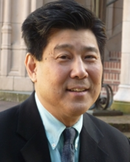
Ross Matsueda
University of Washington


Ross Matsueda is an Emeritus Professor of Sociology at the University of Washington, where he has served on the faculty since 1998. Before that, he was a Professor at the University of Wisconsin – Madison and Chair of the Department of Sociology at the University of Iowa. His undergraduate and graduate degrees are from the University of California, Santa Barbara. In 2016-17 he was a Fellow at the Center for Advanced Studies in the Behavioral Sciences, Stanford University. His influential research at the intersection of social psychology and criminology were notably recognized by the American Society of Criminology in 2016 in its Edwin H. Sutherland Award for outstanding contributions to theory and research in the field of criminology. 

What life experiences have contributed to your interest in social psychology general as well as your specific research areas?

I grew up in a Navy town—San Diego—during the late 1950s. We were the only Asian-American family in my elementary school. I experienced racism from my schoolmates, who were often children of WWII veterans for whom the Japanese were the enemy. It was particularly bad in interactions with boys. I experienced shame and stigma.

In the third grade, I met my best friend’s parents, who recognized my Japanese-American ethnicity and spoke about the internment of Japanese-Americans during WWII, and explained that it was a good thing because it protected the Japanese-Americans. Having never heard about internment, I mentioned to my parents that I’d learned that internment was a good thing. They were stunned. Because of the shame they felt, they had never discussed camp to us. But now, they opened up and shared their humiliating experiences of being interned and the stigma they faced reentering society after the war ended.
Having lived with shame and stigmatization, I was drawn to topics like poverty, racism, and crime. As a child, I was always a good kid. But later, during adolescence, with the tutelage of peers, and my attempts to blend in, I reluctantly joined in on doing drugs, committing delinquent acts, and getting into trouble. I could see both sides: law abiding culture and youth subcultures.

Where did you spend the early part of your sociological career (first as a student and then as faculty)?

I began college at UCSD, where I got turned on to sociology. Given my interests in sociology—ethnomethodology, symbolic interaction, and deviance—the academic advisor in Sociology suggested I transfer to Santa Barbara after my sophomore year, which I did, and ended up taking courses with Donald Cressey, a social-psychological minded criminologist in the Chicago style. He took a great interest in me, sponsoring independent studies courses and hiring me as his teaching assistant my senior year. After considering the University of Chicago, UCLA, University of Arizona, and Columbia, I ended up staying at UCSB because the department fit my interests in deviance, symbolic interaction, and ethnomethodology.

After publishing my M.A. thesis, I got a call from the Sociology Department at Wisconsin inviting me to apply for an assistant professorship. I took the position and spent my assistant and associate professor years at Madison, in what I referred to as “Assistant Professor Heaven.” The senior faculty mentored junior faculty closely, allowed us to focus on research unencumbered by labor-intensive committee assignments, or many new course preps. I was part of a remarkably cohesive cohort of eight new junior faculty—the NAPS (new assistant professors), which included, among others, Larry Bobo, Roberto Franzosi, Adam Gamoran, Richard Lachman, Nora Schaeffer, and Judy Seltzer. Assistant Professor Heaven, indeed.

After tenure, to be with my partner at the time, I moved to the University of Iowa, which had a strong program of social psychology: Willie Jasso and Cecilia Ridgeway had just left, but remaining were Karen Heimer, Ed Lawler, Michael Lovaglia, Barry Markovsky, and Lisa Troyer. After serving a term as Department Chair, I moved back to the west coast to the University of Washington. UW had a storied history of social psychology—Dick Emerson, Karen Cook, Phil Blumstein, and Judy Howard—but by the time I got there, the Department had decided not to replace those that left.

How has your thinking about your subject matter evolved over time?

I was taking mostly science courses at UCSD when I walked into my first sociology course. I loved science—especially models of metabolic pathways in genetics and biochemistry —but fell in love with sociology, which I thought offered a chance to apply scientific models to serious problems facing society, like poverty, crime, discrimination.

I also signed up for the graduate sequence in statistics. Having learned methodology from Aaron Cicourel and Bud Mehan, I knew that statistics in sociology was “bullshit” — “constructs of the second order” in Alfred Schutz’s terms, but wanted to know exactly why they were “bullshit” (my statistics professor suggested they hadn’t learned to count in San Diego). I ended up doing well—better than the graduate students.
I stayed at UCSB for graduate studies. After spending my first year wondering if I’d made the wrong career move—faculty seemed more interested in their next article than improving the world, and creativity seemed stymied by having to “fit into the existing literature”—I wrote a quantitative M.A. thesis testing social psychological theories of crime, which was published in ASR. Suddenly, colleagues referred to “my thing,” which, it turns out meant testing theory using quantitative methods. I started identifying with “my thing,” and eventually it became central to my intellectual identity.

At Wisconsin, I became interested in rational choice theory after taking up with “bad companions,” Irv Piliavin and Rosemary Gartner. I also returned to my love of symbolic interaction and the writings of George Herbert Mead. In graduate school, I took seminars with Tom Shibutani, a former student of Blumer and Wirth at Chicago, on Mead and American Pragmatism. We read Mind, Self, and Society and the Philosophy of the Act chapter by chapter, as well as Dewey’s Human Nature and Conduct, and other classics of Pragmatism. Later, I was influenced by the writings of David Miller, Gary Cook, Shel Stryker, and especially Hans Joas (who briefly overlapped with me on the faculty at Madison) on Mead’s work. My interest in rational choice let me to an interest in James Coleman’s work on social capital theory and the micro-macro problem.

What interests and/or activities, outside of sociology, are important to you?

It is important to me to keep up with current events, and in particular, political developments, particularly in the current fraught period. I also enjoy sports—I no longer play, but remain an avid sports fan—movies, playing guitar, listening to jazz and blues, fine dining, and fine wine.

Given your success in the field, how do you balance professional and personal demands?
I’ve never been very good at this. I tend to immerse myself intellectually in a project—reading broadly and deeply, drilling down to get at underlying assumptions, and using the correct methods. I get so caught up that I often forget to pay bills, file tax returns, and keep up with friends and family. If I were to do it again, I would try to make more time for personal relationships and the demands of everyday life.

Do you know something today that you wish you had known when you started in sociology?

Yes. While most academics are honest, hard-working, and collectively-oriented, there are a few who are more interested in personal glory, will play politics to get ahead, and only feign interest in the collectivity. It is important to recognize these individuals and find ways to work with or around them.

What one piece of advice would give a graduate student? What about an assistant professor?

Graduate school is a time for building research and teaching skills, building a sociological imagination, and acquiring substantive knowledge about a topic. It is also a time of learning what a career in sociology entails, and most importantly, if it is a good fit for the student. By reading top journals, finding role-models, and getting feedback on work, graduate students can proactively decide early on if sociology is the right fit for them, and exactly where they fit.

For assistant professors, it is important to get feedback from thoughtful senior faculty. This is most imperative for faculty within one’s department, but also for faculty in one’s subdiscipline outside the department.

Has your expertise in your subject matter helped you understand or engage with current events?

I think sociologists, more than ever, have the tools to understand what is going on in a complex global system. Those tools have seeped into everyday discourse. I find it striking that sociological concepts like social structure, opportunity costs, identity, social organization, group process, social capital, and intersectionality are increasingly used intelligently in media outlets such as the New York Times. That has changed dramatically in the last 35 years and bodes well for the discipline.

Comments are closed.

    Author

    ASA Section on Social Psychology

    Archives

    March 2021
    February 2021

    Categories

    All
    Voices Of Experience

    RSS Feed

Proudly powered by Weebly
  • Home
    • About Us
    • Join Us
    • Donate
  • Officers and Council
    • Current Leadership
    • Council History
    • Bylaws >
      • Current Bylaws
      • Previous Bylaws >
        • 2011 Bylaws
        • 2005 Bylaws
        • 1995 Bylaws
  • Committees and Awards
    • Committee Members
    • Committee Responsibilities
    • Section Award Calls
    • Cooley-Mead Award
    • Outstanding Recent Contribution Award
    • Student Paper Award
    • Graduate Student Investigator Award >
      • GSIA Faculty Reference Form: Part I
      • GSIA Faculty Reference Form: Part II and Part III
      • Past Recipients
  • News
    • Media
    • Newsletters
    • Chair Reports
  • Resources
    • Sociological Social Psychology Programs
    • Social Psychology Quarterly
    • Related Organizations
    • Carmi Schooler's Cooley-Mead Award Documents
    • Erving Goffman Archives
  • Newsletters